5 Reasons to Choose Aluminium Hydroxide
Industrial-Grade Water Treatment & Multi-Industry Solution
Key applications: Industrial wastewater · Drinking water purification · Flame retardants · Paper manufacturing · Pharmaceuticals · Ceramics
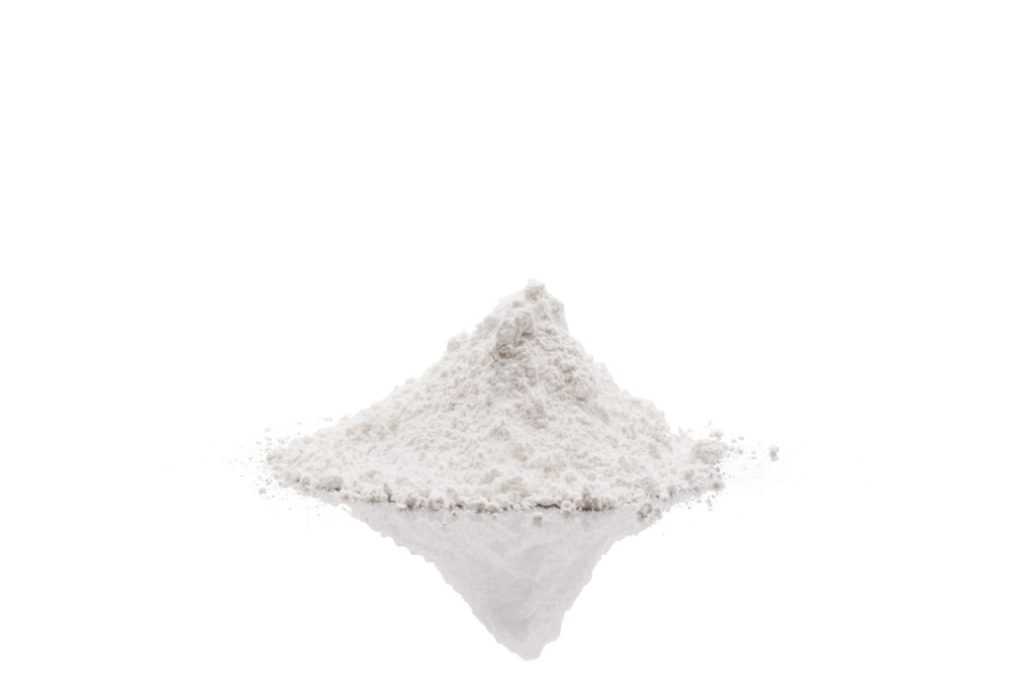
Aluminium Hydroxide (Al(OH)₃) is a white powder inorganic compound derived from bauxite ore. It combines three distinctive properties — flame retardancy, high whiteness and electrical insulation — making it indispensable across water treatment, flame retardant materials, paper manufacturing, pharmaceuticals and ceramics. It is also a foundational raw material in Southeast Asia's manufacturing supply chains, and quietly present in many everyday products around us.
Efficient impurity removal for stable water quality
- Rapidly coagulates fine particles, suspended solids and microorganisms
- Significantly improves drinking water clarity and safety
- Stabilises process water in industrial operations
Consistent water quality is the foundation of consistent production.
Lower maintenance costs, longer equipment life
- Reduces sludge generation for easier system upkeep
- Prevents scale build-up and pipeline damage
- Extends equipment service life and reduces replacement frequency
Less downtime translates directly into lower operating costs.
Safe to handle, operator-friendly
- Relatively stable and non-strongly corrosive
- Minimal impact on pipelines and storage tanks
- Low risk to personnel and the environment at recommended dosages
A safer choice suitable for operations of all scales.
Strong cost efficiency, regulatory compliance
- Reduces sludge disposal costs and energy consumption
- Streamlines treatment processes for better overall efficiency
- Helps meet discharge standards and avoid regulatory penalties
Some facilities report 15–20% savings in operating costs after adoption.
Environmentally sound and sustainability-aligned
- Reduces reliance on other chemical agents
- Minimises by-products and chemical residuals
- Supports ESG reporting and corporate sustainability goals
Sustainable water treatment is increasingly central to ESG commitments.
Industrial wastewater & drinking water
Acts as a coagulant and flocculant to remove suspended solids and heavy metals, achieving compliant discharge water quality.
Cables, wiring & construction materials
A halogen-free flame retardant filler used in cable sheaths, wallpaper, building materials and electronic encapsulation.
Coating & paper filler
Improves paper smoothness, whiteness and print quality as a key process additive in paper manufacturing.
Antacid active ingredient
An active component in antacid medications, requiring pharmacopoeia-grade purity (USP / JP) and high whiteness standards.
Artificial marble & precision ceramics
High-whiteness grades are used in kitchen countertops, ceramic washbasins, refractory bricks and precision ceramic components.
Electrical insulation materials
Leverages its electrical insulation properties in semiconductor packaging and wire and cable coatings.
Wallpaper & wall panels
Added to wallpapers and building panels for flame retardancy, meeting fire safety codes
Kitchen countertops
High-whiteness grades used in artificial marble countertops and kitchen surfaces
Ceramic washbasins
A key raw material in ceramic ware, providing the characteristic white finish and durability
Home electrical wiring
Incorporated into cable insulation sheaths, providing both electrical insulation and flame protection
Antacid tablets
The active ingredient in common antacids, neutralising excess stomach acid
Tap water purification
Used in municipal water treatment plants to remove turbidity and ensure safe drinking water
Is Aluminium Hydroxide a hazardous chemical?
※ Actual classifications vary by country and product specification. Always consult the product SDS (Safety Data Sheet) before use. SDS documents are available upon request.
Where does Aluminium Hydroxide come from?
Aluminium hydroxide is derived from bauxite, a reddish-brown mineral ore. Major producing regions are concentrated in tropical and subtropical zones, including Australia, China, Brazil, Indonesia, Guinea and India. As export restrictions on bauxite tighten across various countries, stable in-region supply from Southeast Asia is becoming increasingly critical for downstream manufacturers.
Following the 1972 London Convention, which prohibited ocean dumping of the red mud generated during bauxite washing, Japan progressively moved aluminium hydroxide production offshore. Raw material is now primarily imported and further processed domestically — including particle size reduction and whiteness enhancement — to meet application-specific requirements.
| Application | Key quality indicators | Notes |
|---|---|---|
| Artificial marble / ceramics | High whiteness | Strict aesthetic requirements; whiteness directly affects finished product appearance |
| Flame retardants / cable insulation | Particle size distribution / resin compatibility | Affects flame retardant performance and processability |
| Pharmaceuticals (antacids) | Purity (pharmacopoeia grade) | Must comply with USP / JP or equivalent pharmacopoeia standards |
| Water treatment | Solubility / reaction rate | Affects coagulation efficiency and treatment cost |
| Paper filler | Whiteness / particle size | Impacts paper gloss and print quality |
Common challenges — and how aluminium hydroxide helps
What is the difference between aluminium hydroxide and aluminium sulphate (alum)?
Both act as coagulants, but aluminium hydroxide works across a wider pH range and is less corrosive, making it easier and safer to handle. Aluminium sulphate offers stronger performance in specific pH conditions. The two can be selected or combined based on water quality requirements.
Is aluminium hydroxide a hazardous chemical? Does it require special storage?
It is generally classified as a non-hazardous material, with no dangerous goods transport labelling required. Storage requires only dry, moisture-free conditions to prevent dust dispersion. Standard gloves and a dust mask are adequate for handling. SDS documents are available upon request.
Do quality specifications vary significantly between applications?
Yes, significantly. Artificial marble and ceramics demand high whiteness; flame retardant applications require specific particle size distribution and resin compatibility; pharmaceutical grades must meet pharmacopoeia purity standards. We recommend evaluating specifications per application rather than adopting a one-size-fits-all approach.
Can Maeda Enterprises supply aluminium hydroxide stably across Asia?
Yes. We have multiple sources across Asia, enabling local supply, shorter lead times and full compliance documentation aligned with regional regulatory requirements.
Aluminium hydroxide plays a critical role across water treatment, flame retardant materials, paper manufacturing, pharmaceuticals and ceramics. Combining high performance, operational safety, cost efficiency and sustainability — backed by a stable Southeast Asia supply chain — it is a dependable long-term partner for industrial operations.
Aluminium Hydroxide Enquiry
Tell us about your application and requirements. We will provide professional recommendations to help you find the right solution. Samples, specification sheets are available upon request.