Anhydrous Sodium Sulfate
(Na₂SO₄) in the Paper Industry
Na₂SO₄ · CAS No. 7757-82-6 · Improve Quality, Reduce Costs, Achieve Sustainable Production
Product Overview
What Is Anhydrous Sodium Sulfate?
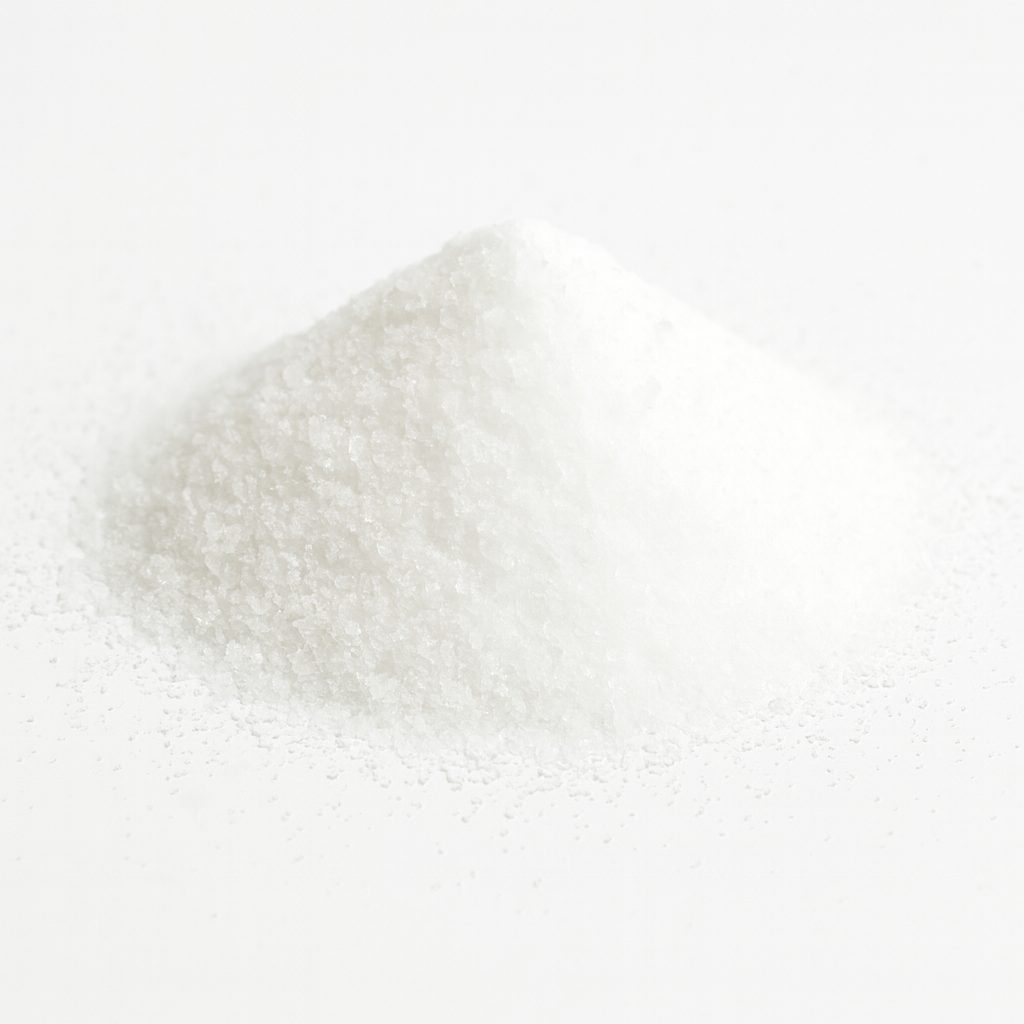
Anhydrous Sodium Sulfate (Na₂SO₄) is a white crystalline powder found naturally in mineral deposits and commonly produced as a by-product of industrial processes — including detergent manufacturing, hydrochloric acid production, and chemical pulp recovery. In the chemical, paper, and glass industries, it is far more than a mere by-product; it is a core processing aid that improves product quality and reduces operating costs.
Highly Water-Soluble
Dissolves rapidly and uniformly in process water, making it well-suited for large-scale continuous industrial operations.
Stable & Safe
Chemically stable and non-toxic with no corrosive properties, ensuring reliable and safe day-to-day use in paper mills.
Environmentally Friendly
Meets modern green manufacturing requirements and supports circular economy and sustainable development goals.
Many Names, One Compound
| Name | Common Context | Notes |
|---|---|---|
| Anhydrous Sodium Sulfate | Academic, chemical, import/export documents | Standard IUPAC chemical name |
| Sodium Sulfate (Anhydrous) | General industrial use | Widely used commercial designation |
| Anhydrous Mirabilite | Mining industry, some manufacturers | Derived from the mineral "Mirabilite" (Glauber's salt) |
| Sodium Sulfate Powder | Product datasheets, procurement documents | Emphasises powdered physical form |
| Na₂SO₄ | Technical specifications, R&D documents | International chemical formula notation |
Manufacturing Process
How Anhydrous Sodium Sulfate Is Produced
Industrial production of anhydrous sodium sulfate follows three primary routes. The typical process flow for the mirabilite mineral refining method and chemical by-product recovery is outlined below.
Raw Material Sourcing
Three primary sources: ① Mining of natural mirabilite (Na₂SO₄·10H₂O) mineral deposits; ② By-product recovery from HCl manufacturing (reaction of NaCl with H₂SO₄); ③ Recovery from viscose (rayon) fibre production processes.
Raw Material StageDissolution & Filtration
Raw materials are dissolved in hot water to remove insoluble impurities such as clay, sand, and iron compounds. The filtered solution yields a clear sodium sulfate liquor ready for evaporative crystallisation.
Purification StageEvaporation & Crystallisation
The solution is concentrated under heat in evaporators, causing mirabilite crystals (Na₂SO₄·10H₂O) to precipitate. This step controls product purity and crystal particle size.
Crystallisation StageDehydration & Calcination
Mirabilite crystals are fed into a rotary kiln or fluidised bed dryer at ≥400°C to remove crystalline water, converting Na₂SO₄·10H₂O into anhydrous sodium sulfate (Na₂SO₄) — the finished product.
Dehydration StageMilling, Screening & Packaging
The dried product is milled to the specified particle size (typically ≤ 0.5 mm), screened, and quality-tested (purity, whiteness, moisture content). Final product is packed in 25 kg / 50 kg bags or 1,000 kg bulk bags for shipment.
Finished Product StageEveryday Applications
Sodium Sulfate in Daily Life
Anhydrous sodium sulfate is not confined to industrial plants — it quietly appears in many consumer products we encounter every day.
Laundry Powder / Detergents
Used as a filler and cleaning booster, improving powder flowability and overall cleaning performance.
Glass Products
Added during glass melting to assist fining and defoaming, resulting in clearer and smoother glass.
Textile Dyeing
Applied in cotton dyeing processes to improve dye penetration uniformity, resulting in more vibrant and long-lasting colours.
Paper & Packaging
A key processing aid in papermaking, helping produce whiter, stronger, and more uniform sheet surfaces.
Pharmaceutical Excipients
Used as a tablet excipient to assist forming and stabilisation of pharmaceutical products, meeting pharmaceutical-grade standards.
Thermal Energy Storage
The phase-change properties of mirabilite enable its use in solar thermal energy storage systems for sustainable energy applications.
Industrial Applications
4 Core Applications in the Paper Industry
In the paper manufacturing sector, anhydrous sodium sulfate plays multiple critical roles that directly impact paper quality and production economics.
Pulping Agent
紙漿助劑
During the pulping process, it assists in breaking down wood chips into uniform, fine fibres, improving pulp quality. The resulting paper exhibits higher tensile strength, better whiteness, and greater sheet consistency — reducing raw material waste.
Chemical Recovery Aid
化學回收助劑
Enables paper mills to recover and recycle spent process chemicals, significantly lowering raw material procurement costs while reducing effluent discharge — supporting environmental compliance and sustainability targets.
Process Stabiliser
製程穩定劑
Effectively buffers pH fluctuations during pulp processing, preventing quality variability and reducing unplanned downtime — ensuring consistent, high-quality paper output from every production run.
Moisture Control
濕度控制
In the drying and finishing stages, it accelerates moisture removal from the sheet, reducing energy consumption and producing a smoother paper surface with improved printability.
Industrial Applications Overview
| Industry | Application | Key Benefit |
|---|---|---|
| Paper Manufacturing | Pulping process aid, chemical recovery | Improved paper quality, lower costs |
| Detergent Manufacturing | Filler in powder detergents, cleaning booster | Better flowability and cleaning efficacy |
| Glass Industry | Glass melt fining agent | Defoaming, improved optical clarity |
| Textile Dyeing | Dye levelling agent | Uniform dye penetration, improved colour fastness |
| Chemical Manufacturing | By-product recovery and utilisation | Waste reduction, improved resource efficiency |
| Leather Processing | Tanning process aid | Improved leather softness and quality |
Handling & Safety
Safe Handling & Storage Guidelines
Anhydrous sodium sulfate is a low-toxicity industrial chemical with a strong overall safety profile. However, the following handling and storage precautions should be observed to preserve product performance and protect personnel.
Storage Conditions
Store in a dry, well-ventilated, cool location away from moisture. Anhydrous sodium sulfate is hygroscopic — exposure to humidity causes caking, which reduces dissolution speed and performance. Use sealed packaging and store on elevated pallets away from floor-level moisture.
Operational Safety
When handling over extended periods, wear a dust mask and safety goggles to prevent inhalation or eye contact with fine particles. Wash hands after handling. Although non-toxic, prolonged inhalation of fine powder dust should be avoided.
Temperature Management
Melting point is approximately 884°C; the product is chemically stable at ambient temperatures. In high-temperature, high-humidity environments (>35°C, relative humidity >70%), the risk of moisture absorption and caking increases. Ensure packaging remains tightly sealed under such conditions.
Compatibility Check
Avoid co-storage with strong reducing agents (e.g. aluminium powder) to prevent unintended chemical reactions. When formulating industrial blends, verify compatibility with other process chemicals before use. Contact our technical team if clarification is needed.
Regulatory & Documentation
Industrial-grade anhydrous sodium sulfate is classified as Non-Hazardous and does not require special dangerous goods transport authorisation in most jurisdictions. Verify import regulations in the destination country prior to export. Full SDS (Safety Data Sheet) is available upon request.
Shelf Life
Under standard packaging and dry storage conditions, the product typically has a shelf life of 2 years. Caked or moisture-absorbed product may be re-dried for use, but quality testing to confirm purity compliance is recommended before reintroduction to the process.
Solutions
Are These Challenges Familiar?
We understand the operational pressures facing procurement managers and quality assurance personnel in paper mills, detergent plants, and glass factories. Here is how anhydrous sodium sulfate addresses these challenges directly.
😓 Problem
Inconsistent paper quality leading to customer complaints
Whiteness variation and tensile strength differences within the same batch result in customer dissatisfaction and lost orders.
✅ Solution
Process Stabiliser maintains pH and ensures consistent quality
Sodium sulfate buffers pulp pH throughout the process, reducing batch-to-batch variation and significantly cutting quality complaints.
😓 Problem
Persistently high chemical reagent costs
Large monthly consumption of pulping chemicals drives up procurement costs and erodes profit margins.
✅ Solution
Chemical Recovery Aid reduces raw material expenditure
Incorporating sodium sulfate into the chemical recovery circuit enables spent process chemicals to be reclaimed and reused, delivering substantial cost savings.
😓 Problem
High drying energy consumption and rising electricity costs
The drying section accounts for a major share of production energy costs, making energy reduction targets difficult to achieve.
✅ Solution
Moisture Control Aid improves drying efficiency
Appropriate addition during the drying stage shortens cycle time, indirectly reducing energy consumption and helping meet sustainability targets.
😓 Problem
Growing environmental compliance pressure and effluent management challenges
Increasingly stringent regulations on process effluent discharge create compliance risk and potential financial penalties.
✅ Solution
Supports circular economy and reduces effluent volume
Sodium sulfate enables closed-loop chemical utilisation, reducing effluent generation and helping facilities meet environmental discharge standards.
😓 Problem
Unreliable supplier delivery causing production line shutdowns
Frequent raw material supply delays disrupt production schedules and damage customer trust.
✅ Solution
Maeda provides a stable Asian supply chain
We deliver reliable, on-schedule raw material supply to safeguard your production continuity.
Frequently Asked Questions
FAQ
Get In Touch
Interested in a Trial or Bulk Order?
We Offer Free Samples
Share your application requirements and we will help you identify the right specification and solution.
Languages available: English · Chinese · Japanese · Thai